
The "Pass" that Leads Nowhere: Why Nepal’s Korean Dream is Turning Into a Nightmare
5/25/2026
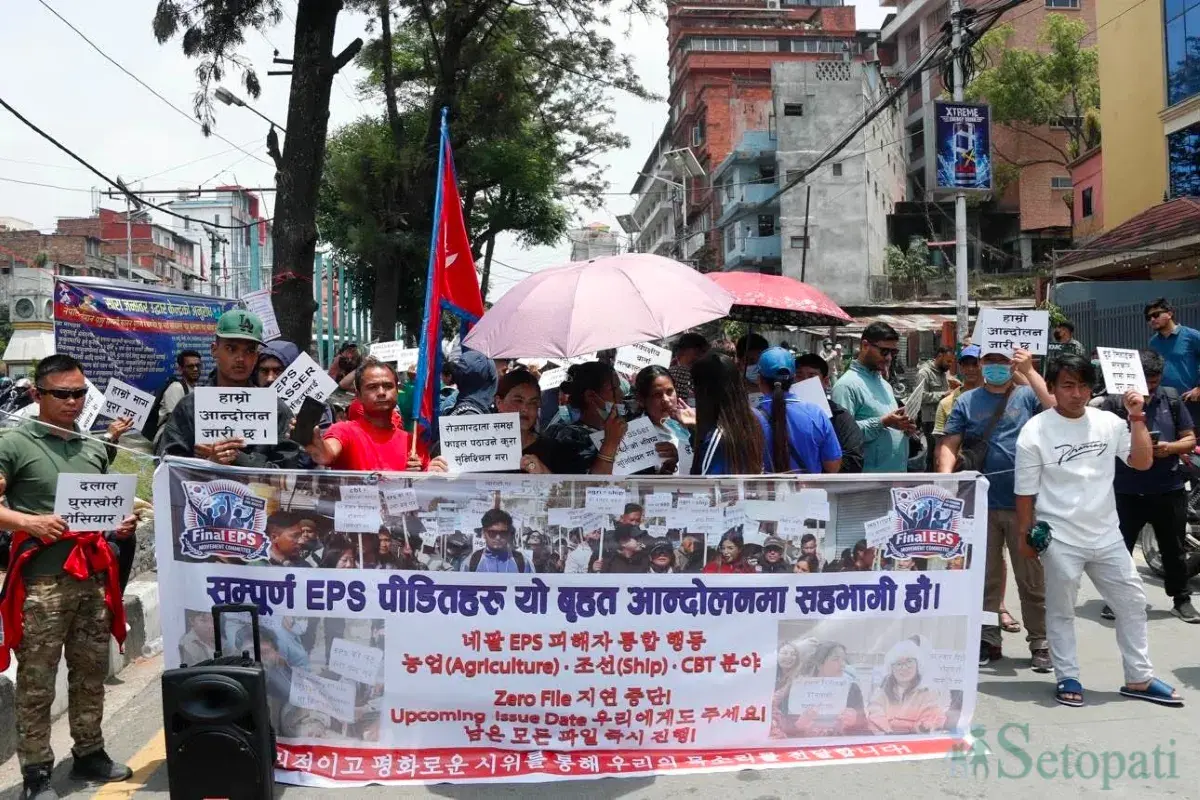
Under the sweltering sun of Kathmandu, the paved open space of Maitighar Mandala has become a theater of broken promises. There are no banners of celebration here, despite the crowd consisting of thousands who have achieved a feat of immense difficulty: passing the South Korean Employment Permit System (EPS) language and skill tests. Instead, the air is thick with the dust of chanting and the sight of handwritten placards demanding justice. For these youths, a "pass" mark is not a ticket to a better life; it is merely an entry into a systemic purgatory. As a labor migration analyst, I see this not just as a backlog, but as a total collapse of the diplomatic and ethical framework that underpins the Government to Government (G2G) labor model.
The "Roster" is a Waiting Room, Not a Gateway
In the current EPS framework, passing the rigorous examination whether in the Agriculture or Manufacturing sectors is a deceptive milestone. Success does not grant a job; it grants a place on a "roster." This roster is effectively a digital database where candidates sit, waiting for a final selection that may never come.
The "selection dependent" model creates a staggering power imbalance. Unlike a standard civil service list where candidates are hired based on merit rank, the EPS roster allows South Korean employers to cherry pick individuals based on opaque preferences. This leaves the worker who has already proven their competence with zero agency. Whether you passed the Agriculture test or the Manufacturing test, you are reduced to a static profile in a system that favors employer convenience over worker rights.
"Our hard work, our rights. Give justice to those who have passed!" Slogan from protestors at Maitighar Mandala.
The Two Year Ticking Clock
The most predatory aspect of this system is the "expiration" policy. A candidate's eligibility on the roster is valid for only two years. If a South Korean employer does not select them within that window, their status is automatically rendered inactive. Through no fault of their own, thousands of qualified, high achieving individuals see their hard won success vanish simply because a clock ran out.
This policy forces youths into a desperate race against time. They have done everything the system asked of them, yet they are penalized for administrative delays and limited quotas beyond their control. Consequently, the primary demand echoing across Maitighar is clear: the government must negotiate an extension of the roster validity by at least another two years to prevent a mass "expiration" of hope.
The Hidden Costs of a "Success" Story
The "Korean Dream" is a high stakes investment. To even reach the roster, these youths spend months, often years, in intensive language institutes, forgoing other education or local employment. They spend significant sums on training, health checks, and documentation fees. When this investment results in "eligible unemployment," the toll is catastrophic.
The psychological weight of being "qualified" but "discarded" is immense. These individuals live in a state of suspended animation, unable to move forward with their lives in Nepal because they are tethered to the hope of a phone call from Korea that never rings.
"We have been forced to endure mental, economic, and social pain due to the lack of progress after passing the exam." Voices from the protest.
A Crisis of Transparency and Administrative Inertia
The protests at Maitighar are a direct indictment of the Nepali government's "administrative inertia." There is a biting irony in a state that is efficient at conducting exams and collecting fees, yet remains toothless in diplomatic negotiations. The protesters allege that the Ministry of Labor and the EPS Korea Section have provided nothing but empty "assurances" while the youths require actual "employment".
To break this deadlock, the protesters have put forward three non negotiable demands:
Extension of the roster period: Automatically extending the validity of the eligibility list by at least two years.
Re-submission of candidate profiles: Proactively re-sending the files of unselected candidates to Korean employers to ensure they aren't buried by newer applicants.
Implementation of a transparent selection system: Moving towards a fair and predictable method of selection that removes the current "lottery" feeling of employer choice.
Conclusion: The Future of G2G Labor Migration
The G2G model was pioneered to protect workers from the predatory practices of private manpower agencies, promising a "safer" and "fairer" path. However, the current crisis in the EPS system suggests that the state has merely traded one form of exploitation for another one characterized by bureaucratic indifference rather than private greed.
The resolution of this standoff will determine the cred