
The Promised Land on Hold: 4 Critical Takeaways from the Maitighar Protests Over Israel Employment
5/26/2026
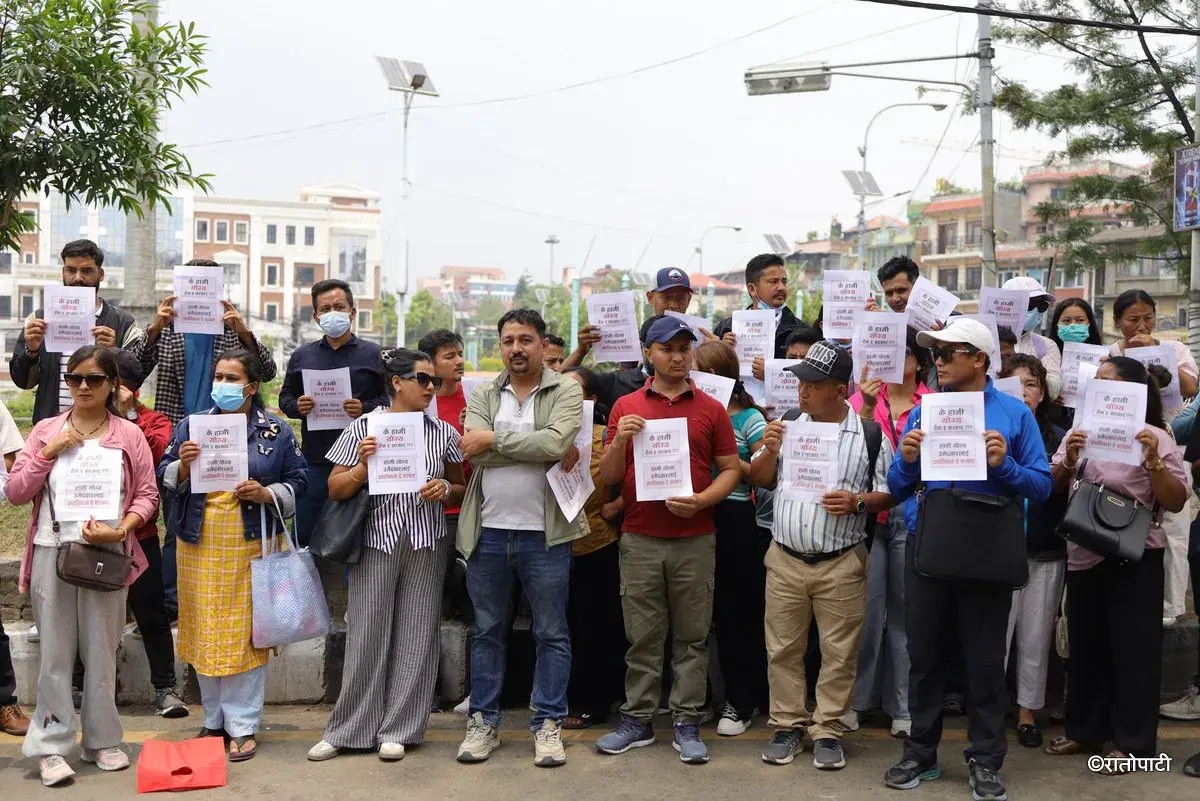
A Dream Deferred at Maitighar
For thousands of Nepali youth, the prospect of employment in Israel represented a definitive exit from economic stagnation a rare chance to secure a future through a high integrity, government sanctioned labor corridor. However, that dream has been suffocated by a fog of institutional inertia and shifting policies.
At the Maitighar Mandala in Kathmandu, the recent protests organized by these candidates are a physical manifestation of a profound "anyol" (uncertainty and confusion) that has paralyzed the migrant workforce. After navigating complex selection procedures, these workers find themselves trapped in a state of professional limbo, caught between the government’s verbal platitudes and a sudden, volatile shift in the rules of the game. The current unrest is the boiling point of a two year delay that has transformed a procedural wait into a full blown crisis of confidence in the state's labor migration governance.
Takeaway 1: The Two Year Limbo is Not Just a Delay It’s a Crisis
Field reports and candidate testimonies confirm a grueling two year wait for those seeking placement in Israel. In the high stakes world of global labor markets, a two year delay is not a mere administrative hiccup; it is a catastrophic economic and emotional burden. Candidates who have successfully cleared every hurdle have effectively placed their lives on standby, forgoing other employment or educational paths in the expectation of departure.
This prolonged stasis is a direct symptom of what protesters describe as a systemic failure of leadership. The candidates’ grievances underscore a deep seated frustration with the current administration's handling of the file:
"Youth who have been waiting for Israel employment for the past two years have complained that they have been treated unfairly due to the irresponsible work style of the government and related bodies."
This "irresponsible work style" has forced qualified individuals to drain their meager resources and morale, exposing the human cost of bureaucratic inefficiency.
Takeaway 2: The "Lucky Draw" Betrayal and the Devaluation of Merit
The core of the current anger lies in a perceived betrayal regarding the selection mechanism. While recent reports confirm 2,300 new quotas for Israel, the government is reportedly preparing to force previously qualified candidates to re-enter a lottery system.
For workers who have already survived the 2081 B.S. selection process and received verbal confirmation of their status, being told they must once again rely on a randomized "lucky draw" is more than an injustice it is a systemic devaluation of prior merit. By demanding that qualified workers compete as if they were new applicants, the government is effectively resetting their legal and professional standing. This move suggests that the state values the convenience of a randomized lottery over the integrity of its own certification and selection history.
Takeaway 3: The Disconnect Between Assurances and Official Action
There is a stark, investigative gap between the informal promises made by officials and the formal notices or lack thereof issued to the public. Candidates report a pattern of repeated verbal assurances from the Department of Foreign Employment (DoFE) that have consistently failed to materialize into binding policy.
The scale of this "crisis of confidence" is evident in the breadth of the candidates' advocacy. They have moved beyond local protests to petition the highest echelons of the state:
The Department of Foreign Employment (DoFE): Targeted as the primary administrative body responsible for the failed communication.
The Ministry of Labour, Employment and Social Security: Petitioned to address the broader policy volatility.
The Ministry of Foreign Affairs: Involved due to the critical need for diplomatic negotiation and clarification of the labor protocols with Israeli counterparts.
The protesters’ claims highlight a recurring theme of administrative gaslighting:
"According to the candidates, responsible officials of the department had been promising that the candidates who were not selected in the lottery held in 2081 B.S. would be automatically included in the new quota."
The failure to honor these commitments has transformed a logistical bottleneck into a fundamental breakdown of trust between the citizen and the state.
Takeaway 4: The Demand for a "Secured Quota"
The protesters at Maitighar are not seeking an unearned shortcut; they are demanding the recognition of their status as already qualified labor. Their primary policy demand is the establishment of a separate, secured quota for those who have already successfully navigated the selection system.
The logic behind this demand is analytically sound and rooted in the principles of fair labor migration:
Prioritization of Vetted Labor: Individuals who have already met all qualifications should take precedence over a randomized pool to ensure the most prepared workers are deployed first.
Institutional Accountability: A secured quota is the only way for the DoFE to honor its prior commitments and restore its damaged reputation.
Resolution of the "Anyol": This specific policy intervention would provide a clear exit path for those whose lives have been on hold for 24 months.
For policymakers, this demand represents the only viable path to resolving the "anyol" and stabilizing the Israel Nepal labor corridor.
Conclusion: Beyond the Protest Lines
The scenes at Maitighar illustrate a fundamental conflict between a hopeful, industrious youth and a bureaucratic apparatus defined by "anyol." This failure in the Israel labor corridor serves as a troubling indicator of the state of Nepal’s labor migration governance, where the time, effort, and investment of the citizen are treated as secondary to administrative whims.
As the government prepares to move forward with the 2,300 new quotas, it faces a defining choice. Will it continue to manage migration through the randomness of a "lucky draw," or will it honor the integrity of its own procedures? The answer will determine whether Nepal’s youth can ever truly trust the state to manage their futures, or if the "Promised Land" will remain a perpetually deferred dream.